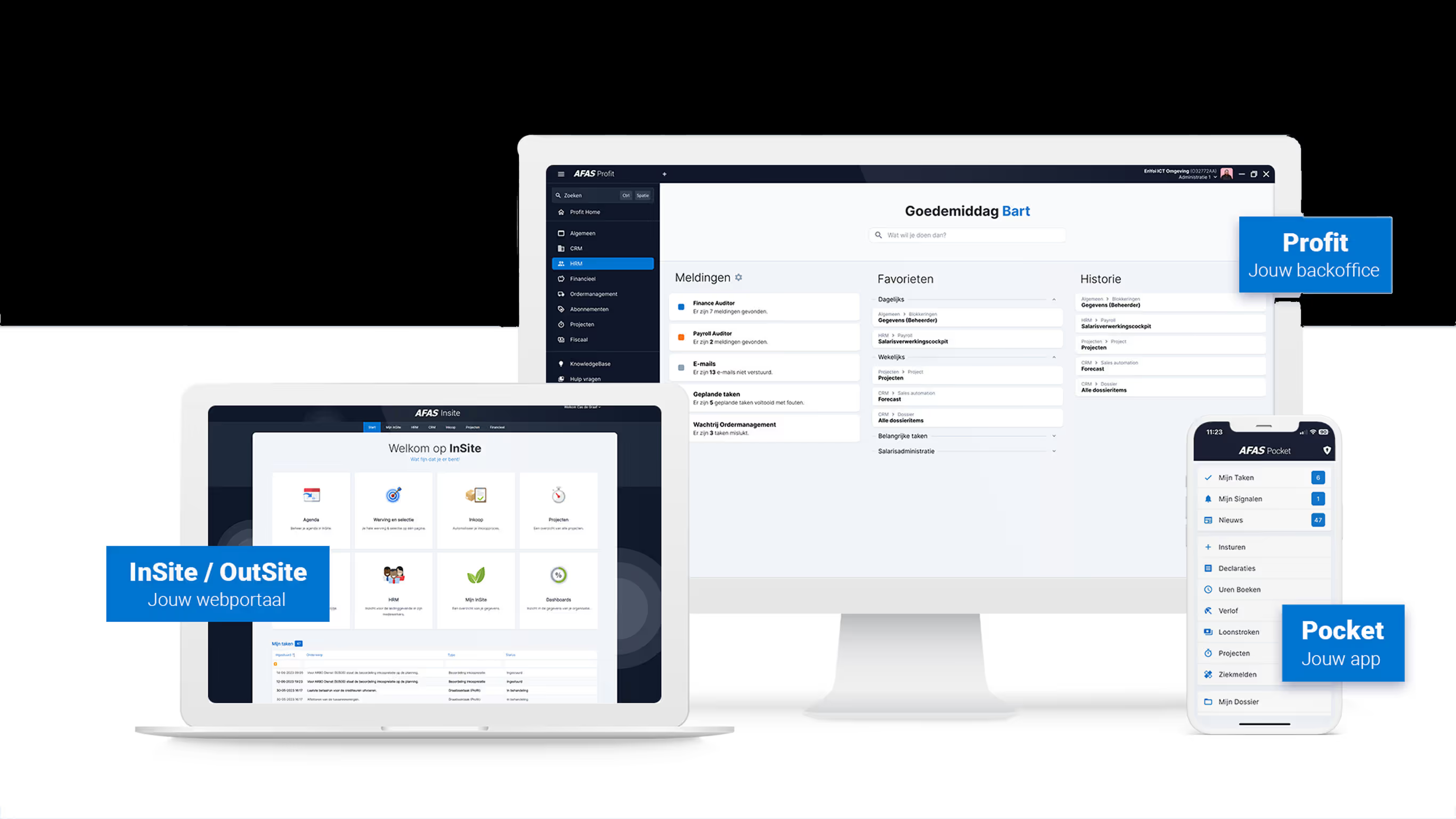
AFAS Software is a Dutch software company specializing in the development of business software. They developed software such as an ERP system, HRM/payroll, and accounting software.
Online reviews are available, but it's important to note that they may not always capture the specific experiences of developers working with AFAS. Hence, this article aims to provide insights into AFAS functionalities, focusing particularly on our experience with the Finance module at Itsavirus.
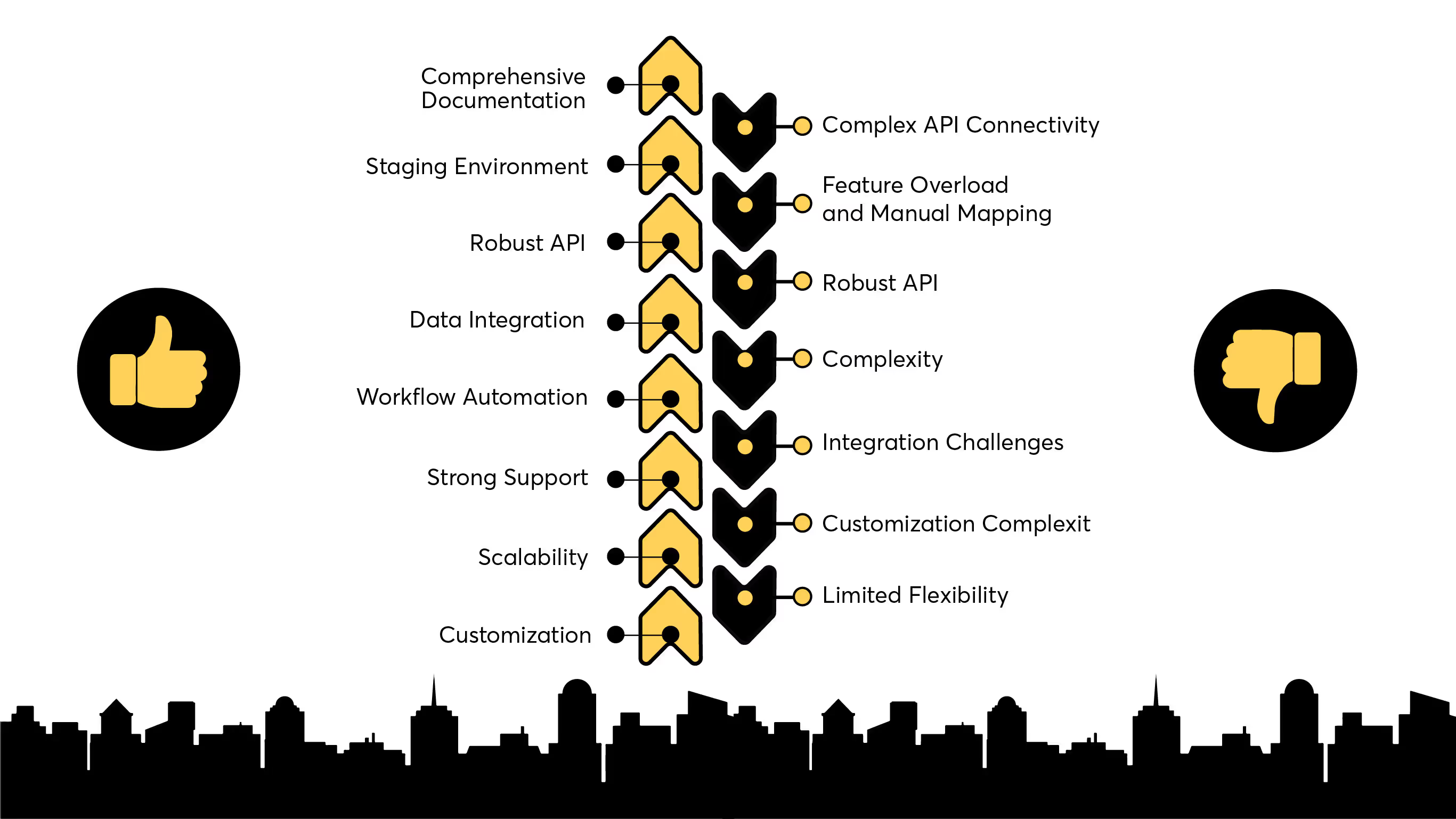
AFAS offers detailed documentation in SOAP/XML and REST/JSON formats, allowing developers to choose based on their specific use cases.
They provide a staging environment, enabling developers to test and experiment without impacting the production data.
AFAS offers a well-documented and comprehensive API that allows developers to integrate their software with AFAS products effectively. This API provides access to various functionalities, including data retrieval, creation, and updates.
You can easily integrate AFAS with other systems and applications, which is essential for businesses to streamline their processes. This can help automate data transfer between systems and reduce manual data entry.
AFAS provides tools for workflow automation, which can be advantageous for developers. You can design custom workflows to automate various business processes, saving time and reducing errors.
AFAS typically offers good developer support, including documentation, training resources, and customer support, making it easier for developers to work with their systems and resolve any issues that may arise.
AFAS solutions are often suitable for small and large enterprises, making them a versatile choice for developers working on projects of various scales.
You can tailor AFAS applications to meet business requirements. Developers can create custom fields, forms, and reports to ensure that the software meets the organization's needs.
Much of the documentation is in Dutch, which poses challenges even when using translation tools, leading to confusion.
Our initial experience connecting with the API was quite challenging, akin to solving a puzzle in a Capture The Flag game. Figuring out the correct communication method through Postman took much work.
We must carefully select appropriate endpoints and perform manual data mapping for each scenario due to its rich features. For example, to retrieve an invoice for a specific customer, it's necessary to understand AFAS's data structure, choose relevant endpoints, and filter the required values to retrieve an invoice for a specific customer. Failing to filter correctly results in an overload of information, necessitating manual endpoint and data mapping for each scenario.
Working with AFAS may involve a steep learning curve for developers who are new to their platform. The complexity of the system and API can be challenging to grasp initially.
While AFAS provides an API, integrating it with legacy systems or specific third-party tools might be challenging due to differences in data formats and compatibility issues.
While customization is a positive aspect, it also has its drawbacks. Extensive customization can lead to maintenance challenges and complicate future upgrades.
Some developers may find that AFAS's proprietary nature limits their flexibility in implementing certain features or integrations compared to open-source alternatives.