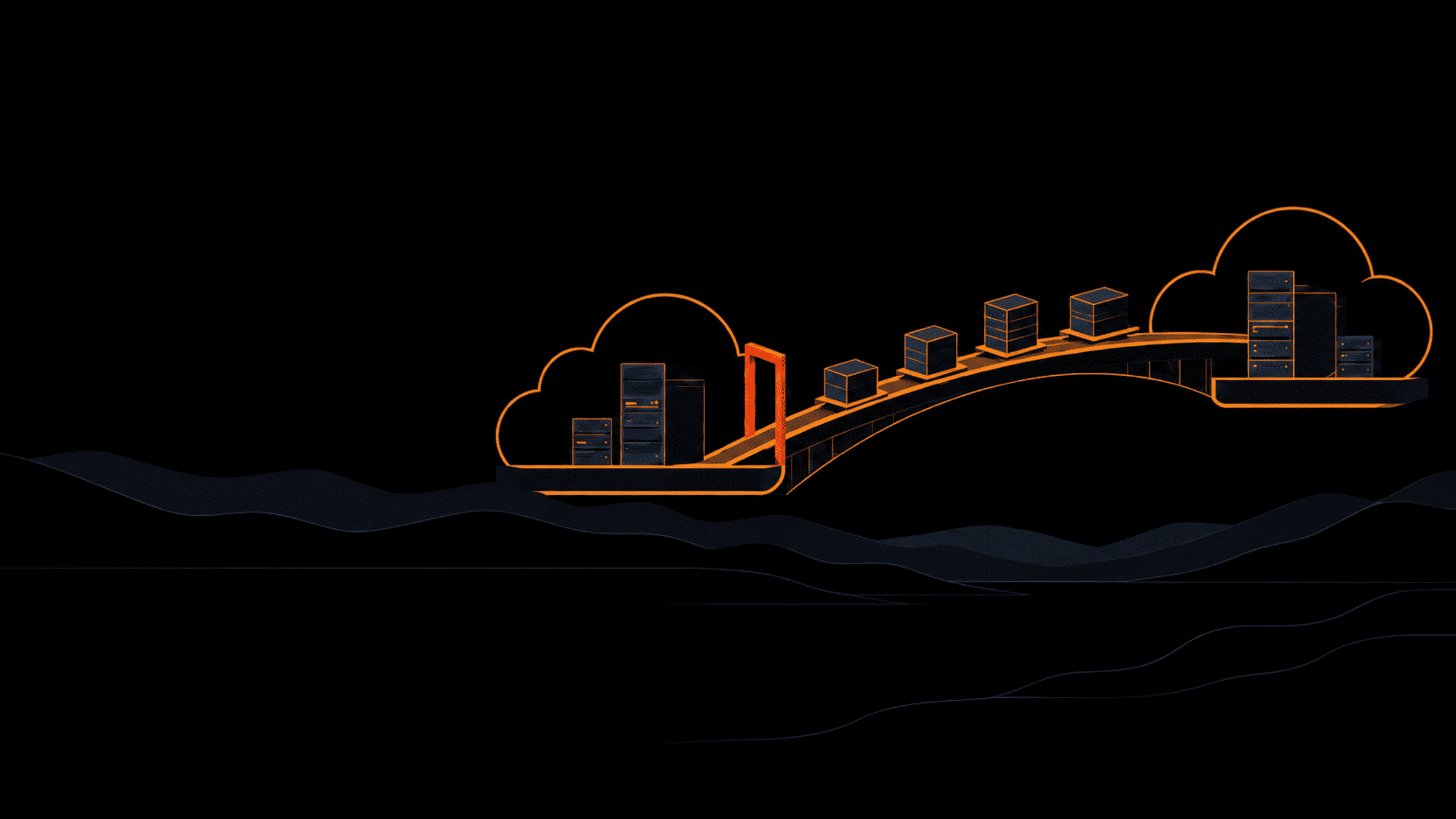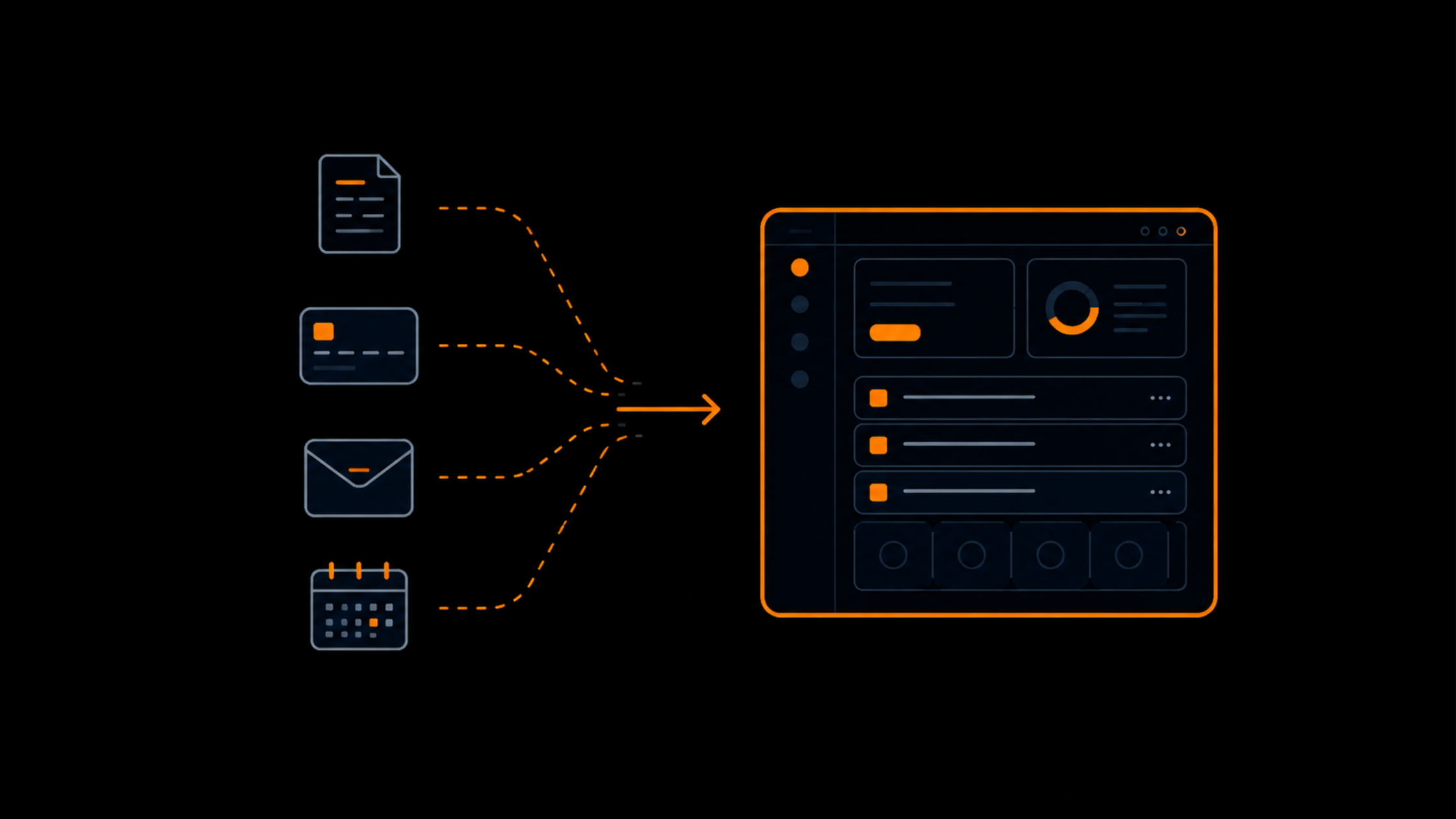
Most digital products don't start as products. They started as a set of tools that were supposed to solve one problem each, and somehow ended up defining the entire operation. Registration in one system, payments in another, a spreadsheet in the middle, and a mailing tool bolted on to keep everyone informed.
It works, in the sense that nothing is on fire. But it isn't really a product. It's a workaround that hardened into a workflow. And at some point the cost of that workaround, in team time, in customer experience, in the ceiling it puts on growth, becomes larger than the cost of replacing it.
That is the moment a lot of businesses arrive at, and it's the moment where the decision to build one platform actually pays back. The interesting question is what it takes to get that build right.
Fragmented tooling has an obvious cost, which is the subscriptions.
That's rarely the reason anyone replaces it. The harder cost is the seams.
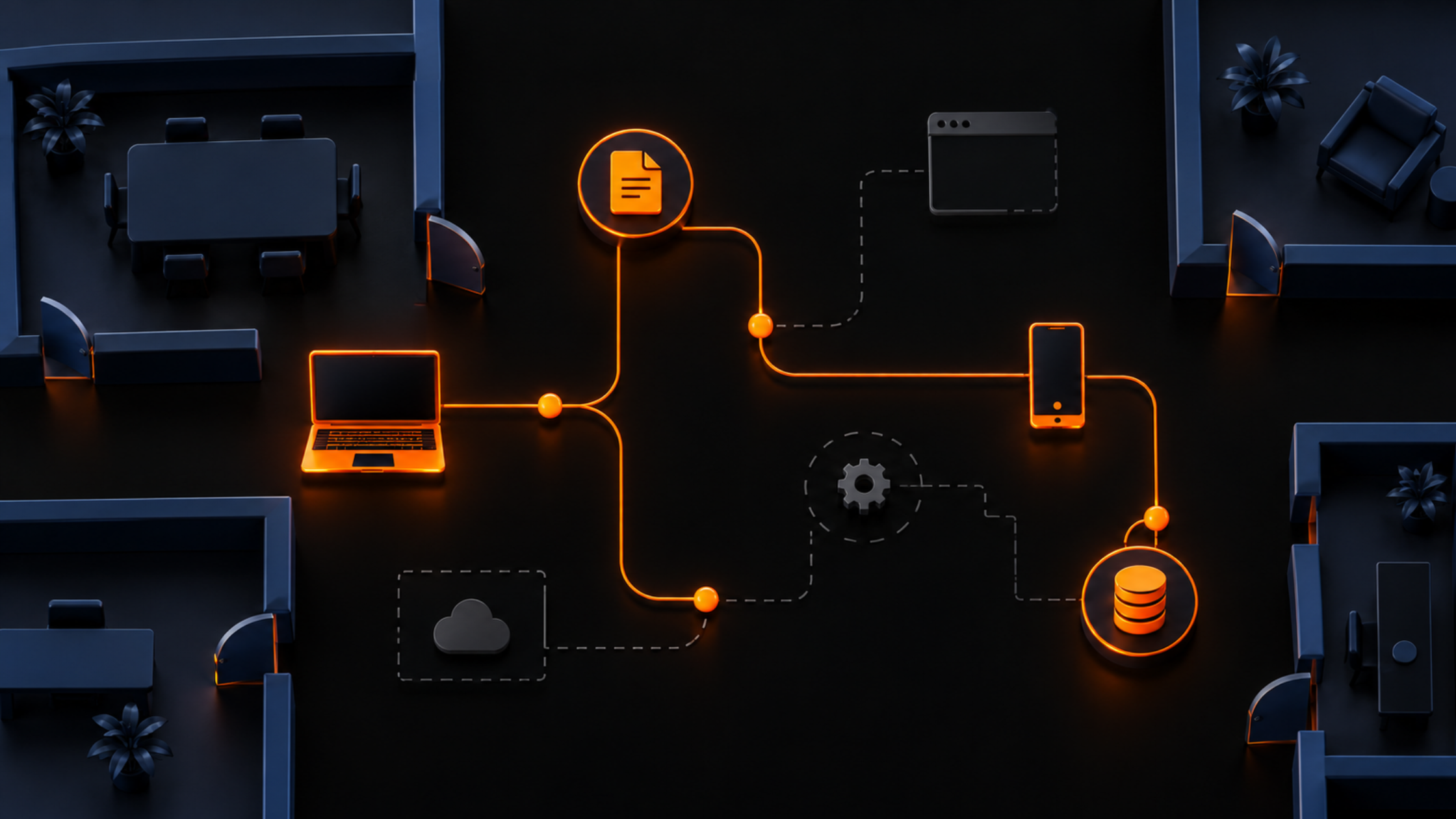
Every handover between tools is a place where data goes stale, where a customer sees two versions of the same information, where a team member has to do a small manual step that nobody wrote down. Individually these are minor. Together they set the pace of the business.
The second cost is customer experience.
A user rarely cares that a company uses three separate systems. They notice that they signed up in one place, paid in another, and then received a generic email that didn't reflect anything they actually chose. That inconsistency is the difference between a product people recommend and a product people tolerate.
The instinct, when a stack starts to strain, is to add one more tool to smooth over the seams.
An integration layer. A workflow automation. It buys time. It also adds another moving part.
At some point the honest answer is a single platform that owns the workflow end to end. Not because platforms are fashionable, but because the core operation is coherent enough to deserve one. The value of a platform isn't in the features. It's in the fact that a single decision made in one place is reflected everywhere else without anyone thinking about it.
Building a platform is usually where the trouble starts. Two failure patterns come up repeatedly.
The first is starting with the technology. A stack gets chosen, a framework gets picked, and then the team tries to reverse-engineer what to build with it. The product ends up shaped by the tools rather than by the users. Features that seemed obvious in the architecture diagram turn out to solve nobody's actual problem.
The second is the opposite. A product vision gets written in detail, handed to a development team, and the team builds exactly what was described. Everything ships. Nothing quite works, because the vision was written before anyone knew what would earn its place in the first release.
A platform is only as strong as the alignment between the business decisions and the technical ones.
The builds that succeed treat strategy and execution as one process, not two phases. The team making architecture decisions understands who the platform serves and what problems it solves. The team shaping the product understands what the architecture will and won't support. When those conversations happen in the same room, the scope stays honest and the features stay grounded in something real.
This is where a lot of the work sits. Deciding which users to serve first. Deciding which features earn their place in the first release and which ones wait. Deciding where AI or automation genuinely helps and where it's a distraction. None of that is a purely technical question, and none of it is a purely strategic one either.
We have worked with Great, a platform for organising sport and adventure events. The starting point was familiar. Event organisers were juggling separate systems for registration, payments and communication, and participants felt the seams. The goal was one platform where organisers could run events end to end and participants could discover, join and prepare for them in one place.
The work that shaped the product wasn't the code. It was the decisions made before the code. Which user group to design for first. Which features belonged in the first release. Where AI personalisation, in this case food plans and training programmes tailored to each event, would genuinely change the experience rather than sit as a marketing line. Once those decisions were made, the technical realisation followed cleanly. The result covers event creation, dashboards, user management and payments on the organiser side, and discovery, joining and personalised preparation on the participant side, all on one scalable foundation.
The point of the example isn't the feature list. It's that a coherent product came out of treating strategy and build as one conversation.
Read the Great case study here
A few questions worth sitting with before starting a build like this.
None of these questions have neat answers, but the process of asking them is what turns a wish list into a product.
Replacing a stitched-together stack with a single platform isn't really a technology project. It's a decision to give the core of the business the coherent foundation it has quietly outgrown. The tools follow from that. The value follows from the fact that, for the first time, a decision made in one place shows up correctly in every other.
If you're weighing up a build like this and want to talk through the trade-offs, get in touch at itsavirus.com. Happy to compare notes.
.jpeg)

When the workarounds between tools start defining how the team works, when customers feel the seams, or when growth is capped by the current setup rather than by demand.
Treating strategy and execution as two separate phases. Business decisions get made without the technical trade-offs on the table, or the build starts before the product decisions have been made.
Where it genuinely changes the experience. Personalisation, automation and generation only earn their place when they solve a real problem for a specific user group.