If you spend any time in tech communities right now, you have probably heard both terms. Vibe coding. Agentic coding. They get used interchangeably, which creates a lot of confusion, because they are not the same thing. They describe different ways of working with AI, with very different implications depending on what you are trying to build and how much risk you can tolerate.
This is a practical breakdown of both.
The term was coined by Andrej Karpathy — former director of AI at Tesla and one of the original OpenAI researchers — in early 2025. He used it to describe a style of development where you lean fully into AI assistance, describe what you want in plain language, accept the output, and move forward without necessarily reading or deeply understanding the code being generated. You trust the model. You iterate fast. You go with the vibe.
The simplest way to understand it: imagine you want a new kitchen. You walk into a showroom and you say, "I want something open, modern, a bit of marble, and good light." The designer disappears and hands you a finished plan. You look at it, say "looks good to me," and sign off. You did not specify the plumbing layout, the load-bearing walls, or the tile adhesive. You described an outcome and accepted the result.
That is vibe coding. You describe what you want. The AI writes the code. You test it, see if it works, tweak the prompt if it does not, and keep going. It is genuinely fast, particularly for getting something off the ground.
Prototypes, landing pages, simple tools, internal scripts. When the stakes are low and speed matters, vibe coding is hard to beat.
The limitation is predictable: you are moving fast on code you do not fully understand. For a throwaway prototype, that is fine. For a system that needs to scale, handle real user data, or integrate with critical infrastructure, you are building on foundations you have not inspected. That becomes a problem eventually.
Agentic coding is a different category. Here, the AI is not just generating code snippets in response to prompts, it is acting as an autonomous agent that can plan, execute, use tools, run tests, read its own output, and iterate across multiple steps, with minimal hand-holding between each one.
Back to the kitchen analogy.
This time, instead of a showroom designer, you hire a project manager. You tell them what you want. They go away, pull the building permits, brief the contractors, check compliance with local regulations, oversee the installation, flag a potential issue with the pipework before it becomes expensive, and come back to you only when there is a decision that genuinely needs your input. They are not waiting for you to approve every tile. They are working autonomously within a defined scope, using their own judgment along the way.
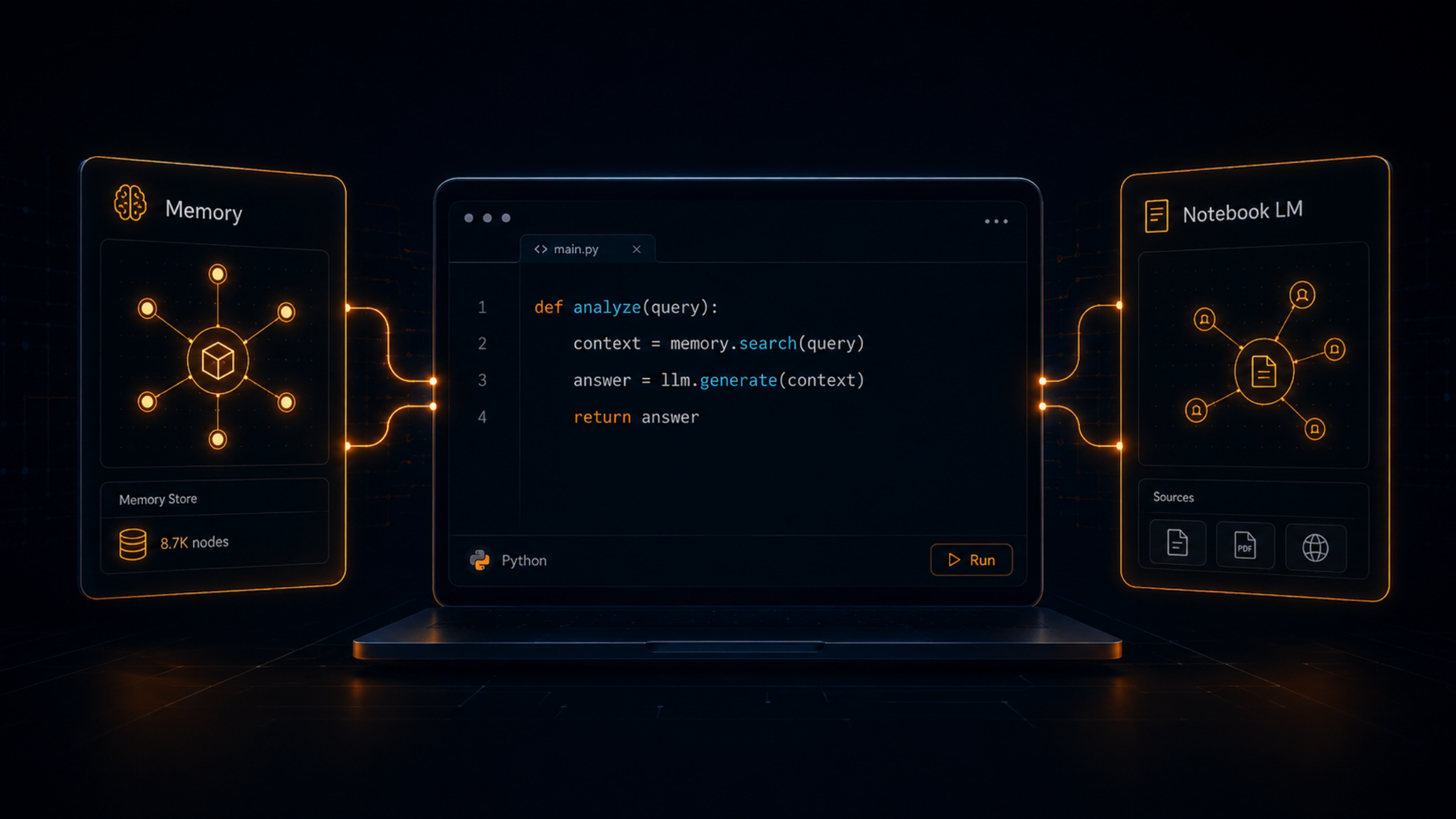
That is agentic coding. Tools like Claude Code, Cursor in agent mode, or Devin operate this way. They can read your codebase, write new files, run a test suite, see where it fails, fix the failure, and loop back — without you needing to prompt each step. They have memories of what they have already done within a session. They use external tools. They reason about consequences.
The shift matters because most real software work is not a single code generation task. It is a sequence of related tasks with dependencies between them. Agentic systems are built for that sequencing. They do not just respond — they plan and execute.
The clearest way to put it: vibe coding is a human-led workflow where AI is doing the heavy lifting on code generation. Agentic coding is an AI-led workflow where the human defines the goal and supervises, but the AI drives the execution.
In vibe coding, you are still steering constantly. Every prompt is a decision point. The AI completes one piece, hands it back to you, and waits. In agentic coding, you set a task, and the system works through it across multiple steps, sometimes dozens of them before returning to you with a result or a question.
There is also a difference in capability ceiling.
Vibe coding works well for discrete, bounded tasks: build me a form, write me a function, create a basic UI. Agentic coding handles complex, multi-step work: refactor this module, implement this feature end-to-end, debug this failure across three services. The complexity that would exhaust a prompt-by-prompt workflow is the natural habitat of an agentic system.
Vibe coding is genuinely useful when you need to move fast on something low-stakes, when you are exploring an idea before committing to it, or when you are working alone on a personal project and code quality is a secondary concern. A lot of founders use it to validate product ideas without writing a single line themselves. For that purpose, it is excellent.
Agentic coding becomes relevant when you are working on production systems, when tasks span multiple files or services, when you need consistent code quality across a large codebase, or when the cost of errors is high. It also starts to show its value when development volume increases, when the work is not one feature but ten, and each one is interconnected. An agent that can hold the full context of what it has already built, and reason about how a new change interacts with existing logic, is genuinely different from a chatbot that helps you write functions one at a time.
For teams, the transition from vibe coding to agentic coding often mirrors a product maturity curve. Early-stage exploration is full of vibe-coded experiments. As soon as something becomes a real product with real users, the need for more rigorous, agent-assisted workflows starts to show.
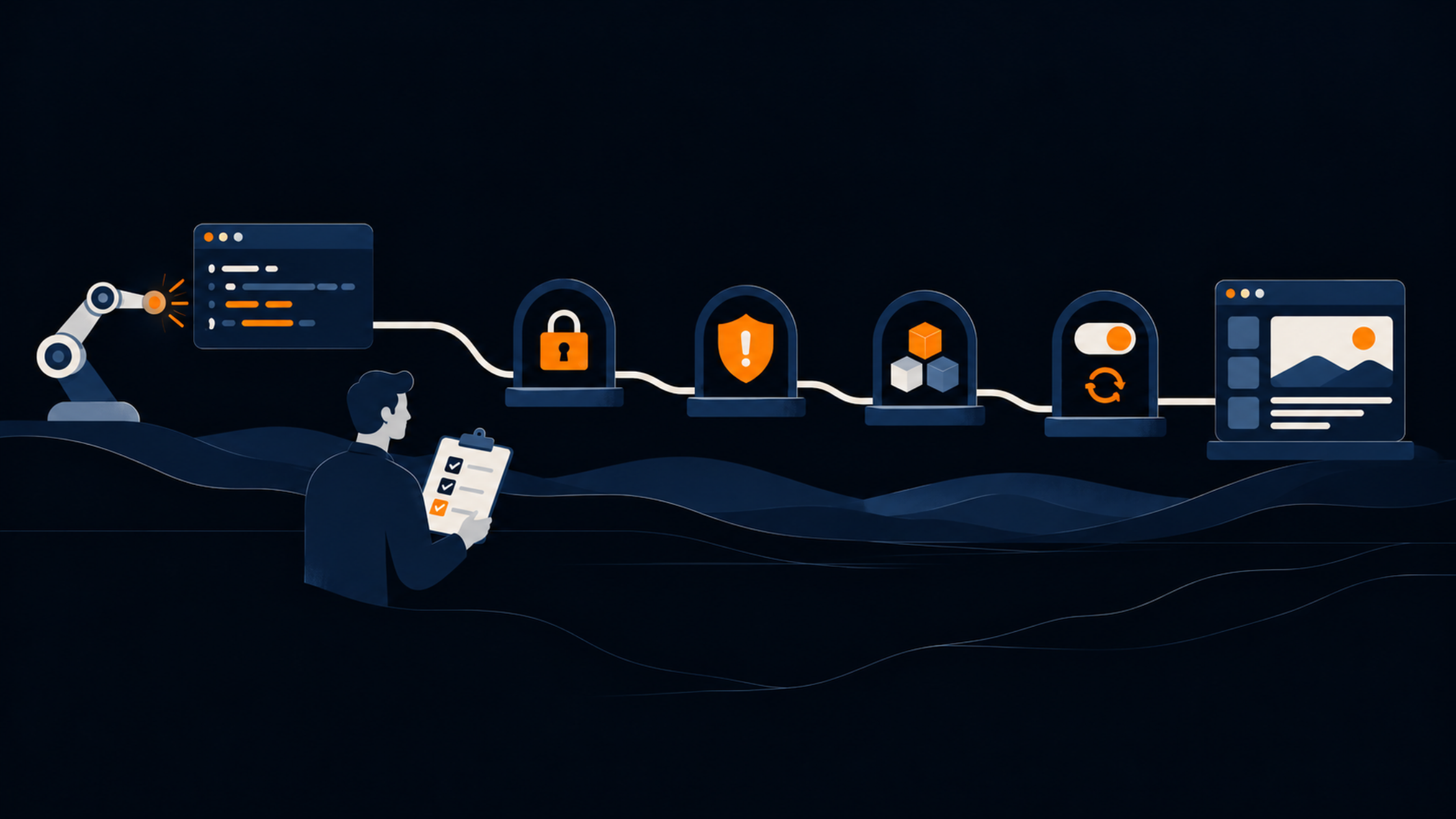
Neither approach replaces engineering judgment. That is probably the most important thing to understand. Vibe coding without a developer reviewing the output is fine for prototypes; it is a liability in production. Agentic coding without a senior engineer setting the right goals, reviewing agent outputs, and catching architectural drift will still produce poor results, just faster and at greater scale.
The opportunity for technology leaders is in figuring out how to structure work around these tools deliberately. That means knowing when to let a developer vibe-code a proof-of-concept, and when to bring in an agentic workflow for structured execution. It means building review practices that account for AI-generated code, not because the code is inherently untrustworthy, but because any code without review is.
We have been integrating agentic workflows into client delivery for a while now, and the gains are real. Not in replacing developers, the opposite, actually. Good developers using agentic tools produce more, move faster, and spend their time on the decisions that actually require human judgement. The routine is handled. The nuanced is not.
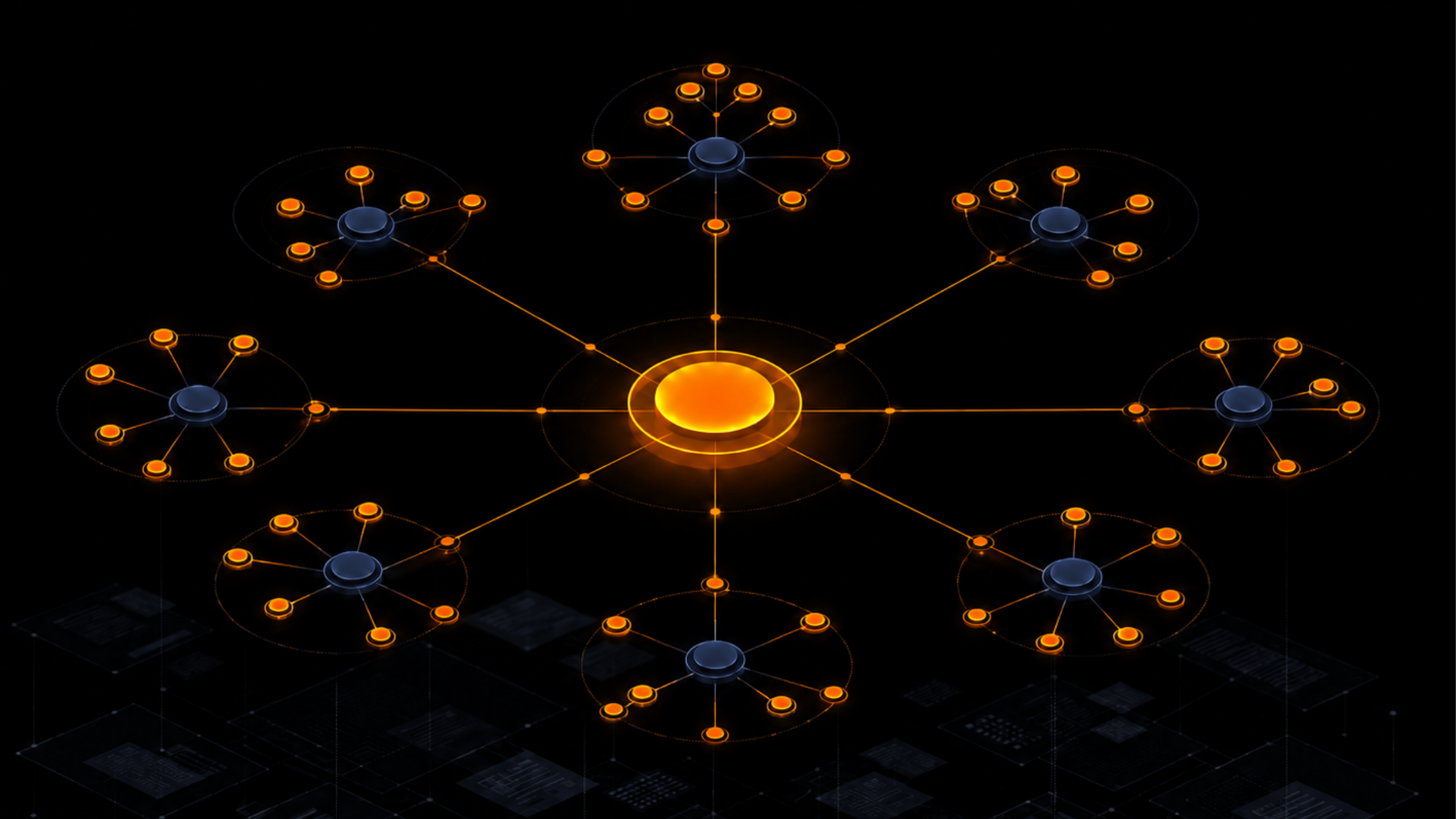
It is worth knowing that agentic coding has a natural next step. Once you move from a single agent handling a task autonomously, the logical progression is multiple agents working together — each with a defined role, coordinating to get something built.
Think of it like building a house. Vibe coding is you and one contractor: you describe what you want, they do the work, you review it together. Agentic coding is a project manager who takes your brief and runs the whole job themselves — pulling in the right resources, managing the sequence, flagging issues. Multi-agent coding is a full construction crew. One agent writes the code, another reviews it for quality, another runs the tests, another checks security, another handles documentation. They hand work between each other without you in the middle of every exchange.
The three stages sit on a clear progression:
Most teams today are somewhere between vibe and early agentic. Multi-agent systems are being used in production, but they require more upfront design, you need to define how agents hand off to each other, how conflicts get resolved, and where human review sits in the loop. The tooling is maturing fast, and within the next couple of years this could be standard practice for engineering teams building at scale.
For now, the practical thing is to understand which mode you are operating in, and whether it matches the complexity of what you are building. A prototype does not need a multi-agent pipeline. A large-scale modernisation programme probably cannot afford to run without one.
If you are thinking through how AI-assisted development fits into your team's workflow, feel free to reach out. We are happy to talk through what we have seen work.