Anthropic launched Claude Design on 17 April 2026. Within hours, the conversation split into two predictable camps: those declaring the end of designers, and those dismissing it as a glorified template generator.
Both reactions missed the more interesting question the launch raises, not about a tool, but about design itself.
What does design mean when generating a first draft takes seconds? Who gets to do it? And what, specifically, remains the work of someone who has spent years learning how to do it well?
Long before Claude Design, the design profession was quietly reorganising itself around a new set of expectations. A survey published in early 2026 found that 89% of designers report improved workflows with AI, the initial paralysis of staring at a blank canvas, wondering where to start, is largely gone. Another survey found that 88% of businesses now use AI design tools, yet only 18% say they have reduced their need for designers.
Those two numbers together tell a more honest story than most of the commentary around AI and design. The tools are everywhere. The designers are still there. What's changed is what they're spending their time on.
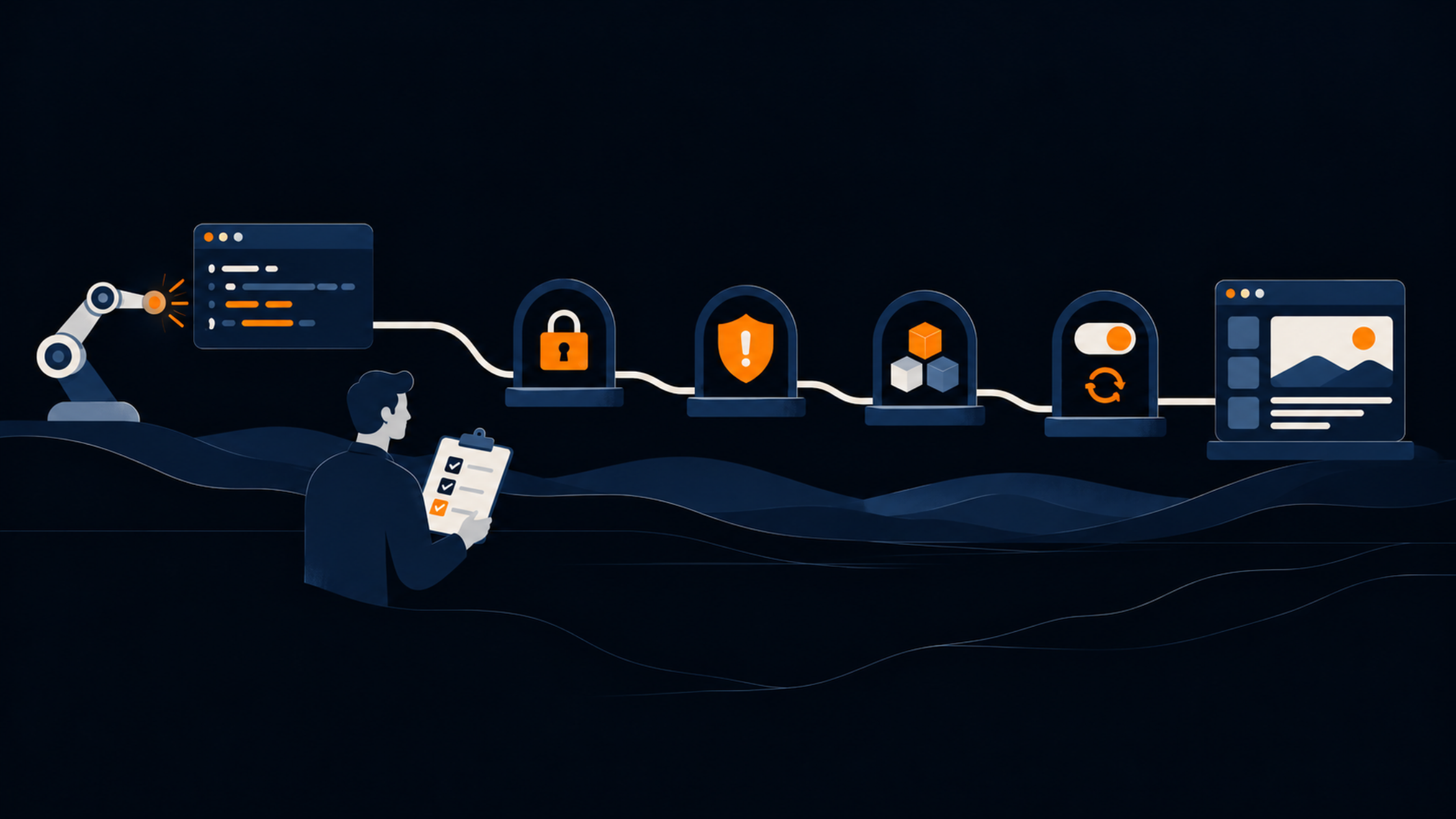
The clearest framing for this shift comes from practitioners rather than analysts: AI handles roughly the first 60% of design work well, layouts, visual directions, placeholder content, initial interaction flows. The remaining 40% polish, brand voice, emotional resonance, the micro-decisions that give a brand its character stays stubbornly human. That's not a temporary limitation waiting to be solved. It reflects something structural about what design at its best actually does.
Claude Design is a useful lens for this conversation precisely because it's honest about what it's for. Built on Claude Opus 4.7 and launched as a research preview, it lets you produce prototypes, wireframes, pitch decks, marketing assets, and design explorations through conversation. It reads your codebase and design files to build a team design system your colours, typography, and components and applies them automatically to everything you create. When a design is ready to build, it packages a handoff bundle directly for Claude Code.
The capabilities are real. Datadog's team reported going from a rough idea to a working prototype before anyone leaves the room. Brilliant's designers brought complex pages from twenty-plus prompts in other tools down to two. These outcomes reflect what the first 60% of design work looks like when the generation cost drops to near zero.
What Claude Design is not trying to do is equally telling. It doesn't claim to replace the judgment required to define what a brand actually feels like. It doesn't generate the kind of design that earns a company its visual identity in the market. It doesn't facilitate the workshop where a team decides what they're communicating and to whom. The things that require a designer's accumulated understanding of people, context, and consequence those are not in scope, and Anthropic has not pretended otherwise.
When Claude Design launched, Figma's stock dropped 7.28% in four hours. The market reaction was instinctive, a new AI design product must be eating into existing territory. But that reading doesn't hold up under scrutiny.
Figma is where design teams do their most precise, collaborative, production-quality work. Its strength is in the detail layer: component libraries, design tokens, real-time collaboration between multiple designers, pixel-level control, developer handoff at a professional standard. None of that is what Claude Design is optimised for. Claude Design is optimised for the stage that happens before Figma even opens the exploration, the rough direction-setting, the first draft that gives a team something to react to.
Canva sits at a different point in the same ecosystem, and the relationship here is explicit. Anthropic partnered with Canva directly so that designs move from Claude Design into Canva seamlessly, where they become fully editable and ready to publish. Canva's co-founder Melanie Perkins described it as bringing ideas from Claude Design into Canva where they instantly become collaborative designs ready to refine, share, and publish. That's not competition, it's a deliberate pipeline. Claude Design handles ideation and first drafts. Canva handles the finishing and distribution layer.
The more accurate read is that Claude Design expands the surface area of where design activity happens, rather than displacing where it currently happens. More people producing earlier-stage visual work means more ideas reaching the point where Figma and Canva become relevant, not fewer.
The more significant consequence of tools like Claude Design is not that fewer people will do design. It's that more people will be involved in the generative, exploratory stages of it, while the work that requires genuine design expertise concentrates further upstream into strategy, brand thinking, and decision-making and in the final critical layer of craft that determines whether something feels right.
This is already showing up in how design roles are described. Designers are increasingly expected to understand business strategy and operational context alongside their visual and interaction skills. The scope is expanding rather than contracting. Senior designers who once spent significant time on production work are being pushed toward decisions that used to sit with brand directors and creative strategists.
More than half of designers surveyed express concern about AI's impact on design quality and that concern is legitimate. When generating something adequate costs nothing, the pressure to invest in something excellent becomes harder to justify inside organisations that can't tell the difference. That's a real professional tension, and it doesn't resolve neatly. But 30% of businesses reporting AI-generated design as lower quality overall suggests that organisations with any real investment in brand differentiation are already discovering where generated work falls short.
There's a distinction that keeps surfacing in conversations with senior designers: the difference between execution and judgment. AI accelerates execution. Judgment, knowing which direction is right, understanding what a brand needs to say in a specific market moment, sensing when something is almost there versus actually there remains a product of experience, observation, and a kind of taste that doesn't reduce to a prompt.
Claude Design, at its most useful, handles the earlier stages of a design process: rapid exploration, first drafts, cross-functional alignment on direction, handoffs that reduce the translation cost between idea and implementation. For organisations that previously couldn't afford to explore ten directions before choosing one, that's a genuine expansion of what's possible. For design teams that previously spent their best hours on work that didn't require their best judgment, it's a reallocation toward the work that does.
The more provocative version of this argument, one worth sitting with is that tools like Claude Design could raise the floor of design quality across organisations broadly, while simultaneously making it harder for work at that floor to claim the same value it once did. If everyone can produce something competent, the question of what makes something genuinely good becomes more economically significant, not less.
Design as a discipline isn't under pressure from Claude Design. It's under pressure from a longer-running question about what it produces that only a skilled human can. That question predates this launch by several years. Claude Design simply makes it harder to defer.
We've been thinking about questions like this across our client work where AI changes the work, where it amplifies it, and where the line between the two sits in practice. If this is a conversation you're having inside your organisation, we're happy to be part of it. Reach out via itsavirus.com/contact-us