When people talk about AI agents, the conversation tends to focus on what the agent can do: browse the web, write code, call an API, summarise a document. The actions. But there is a quieter capability that determines whether any of those actions actually produce useful results over time. That capability is memory.
Without memory, an AI agent starts from zero every time it runs. It has no awareness of what it did yesterday, what the user preferred last week, or what went wrong in the previous attempt. It processes the task in front of it and stops. That is fine for simple, self-contained tasks. But the moment you want an agent to handle anything with continuity, context, or accumulating complexity, the absence of memory becomes a hard constraint.
This is worth understanding clearly before your organisation invests in agentic AI. Not because memory is exotic or technically inaccessible, but because it is often treated as an afterthought in early deployments, and that oversight is expensive to correct later.
Memory in AI is not a single thing. It is a family of mechanisms that store and retrieve different types of information across different time horizons. A useful way to think about it is by analogy to how a person on a team operates.
A new contractor joining a project reads the brief, does the task, and goes home. They have no recall of what was discussed in the meeting two months ago, no awareness of the client's particular sensitivities, and no memory of the iteration that failed in March. They can still do good work, but someone else must carry the context. That is how most AI agents operate today.
A senior employee in the same role has something different. They remember the client's preferences from previous engagements. They know which approaches have been tried and why they were abandoned. They can pick up a thread from where it was left. This is what memory enables in an AI system, and it comes in several distinct forms.
This is the most basic form. Everything the agent can 'see' within a single session sits in what is called the context window. Think of it as the agent's working desk. It holds the current conversation, any documents you have loaded, and the instructions you have given. The limitation is that the desk has a fixed size, and when the session ends, it clears.
For many tasks, this is sufficient. But it creates a ceiling. A long research session, a multi-day project, or an ongoing customer relationship cannot be meaningfully supported by in-context memory alone.
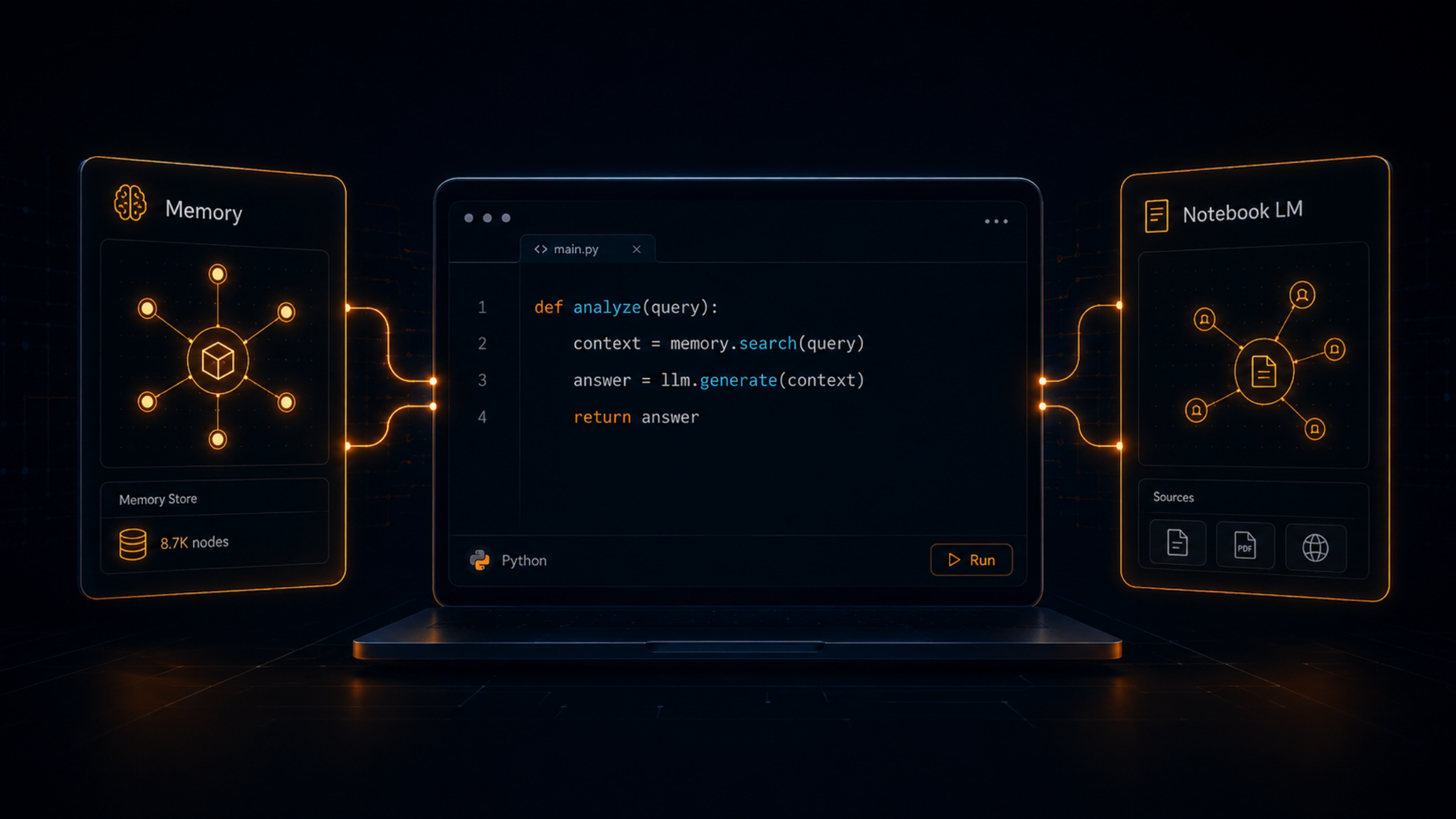
External memory solves the persistence problem by storing information outside the model and retrieving it when needed. This is typically implemented as a vector database or a structured knowledge store. The agent can write observations to it during a task, and retrieve relevant context at the start of a new one.
This is where retrieval-augmented generation (RAG) fits in. Rather than loading an entire knowledge base into the context window, the agent queries the external store and pulls in only what is relevant to the current task. Done well, this approach scales to very large knowledge bases without inflating compute costs.
Procedural memory is about learned behaviours: how the agent performs a task, not just what it knows. In AI systems, this is encoded in the model weights through training and fine-tuning. It is the slowest to change and the most stable form of memory. When a model has been fine-tuned on your company's support tickets, that is procedural memory at work.
Episodic memory records what happened in previous interactions: specific conversations, outcomes, and feedback. This is what allows an agent to recognise that a particular user dislikes overly detailed responses, or that a specific approach to a problem was rejected last time. It is contextual in a way that procedural memory is not, and it is increasingly supported by frameworks that let agents log and retrieve summaries of past sessions.
The architectural choice that matters most is not which model you use. It is how you design the memory layer that sits around it.
There is a meaningful difference between a language model responding to a prompt and an AI agent running autonomously over time. The former is a tool you query. The latter is a system that acts, evaluates, iterates, and builds on previous steps.
In a purely reactive setup, the user provides context each time. A developer asking a coding assistant a question pastes in the relevant file, describes the problem, and gets a response. Repetitive, but manageable. The cognitive overhead sits with the human.
Agents are designed to shift that overhead to the machine. An agent handling customer onboarding, internal knowledge retrieval, or automated reporting is expected to operate with minimal hand-holding. That expectation only holds if the agent has access to the context it needs to act intelligently. And that context has to come from somewhere. Memory is that somewhere.
The failure mode without it is subtle at first. The agent completes tasks but makes decisions that seem inconsistent. It asks for information it has already been given. It repeats approaches that previously failed. Over weeks, the accumulated friction erodes confidence in the system. The organisation concludes that the technology is not ready, when the actual problem was a design gap in the memory architecture.
The implementation depends on the use case, but there are a few patterns that come up consistently in agent deployments we have worked on.
At the end of each agent session, a summary of key decisions, context, and outcomes is written to an external store. At the start of the next session, relevant summaries are retrieved and loaded into the context. This is one of the simplest approaches to episodic memory and it works well for conversational agents where continuity matters but the volume of historical interactions is manageable.
For agents operating within a specific domain, such as a product catalogue, internal policy documentation, or a codebase, the external memory store is often a structured or semi-structured knowledge base. The agent retrieves from it selectively based on the task at hand. The design question here is how to keep the knowledge base current and how to handle conflicting or outdated information.
In customer-facing applications, agents benefit from profiles that record user preferences, interaction history, and known context. This is not novel technology. CRM systems have done this for decades. What is different in an agentic context is that the profile is retrieved and used dynamically to shape behaviour in real time, not just to inform a human who then makes the decision.
In multi-agent systems, where different agents handle different parts of a workflow, shared memory becomes a coordination mechanism. One agent's output becomes the next agent's input, and a shared state store ensures that each agent operates with consistent information. This is architecturally more complex, but it is central to building agent pipelines that can handle real organisational workflows.
Memory architecture is not just a technical problem. There are a few principles worth carrying into any serious agent project.
Relevance over volume. Loading more context is not always better. Irrelevant information in the context window can degrade agent performance. Good memory design focuses on retrieving the right information, not the most information. This requires investment in how memories are tagged, indexed, and retrieved.
Decay and refresh. Not all memory ages equally. A user's stated preferences from two years ago may still be valid. A summary of a project that has since been cancelled is probably noise. Memory systems need mechanisms for updating, deprecating, and sometimes discarding stored information. This is an operational consideration that is easy to underestimate in the build phase.
Transparency. When an agent acts on stored memory, there is a question of accountability. If an automated system makes a decision based on information logged six months ago, can you trace that? For any deployment in a regulated context or one with significant operational consequences, the ability to audit memory retrieval is not optional.
Privacy and scope. In enterprise settings particularly, you want careful boundaries around what an agent remembers and for whom. A shared memory layer that leaks sensitive information across users or teams creates risk. The access controls around memory stores deserve the same attention as the access controls around any other system.
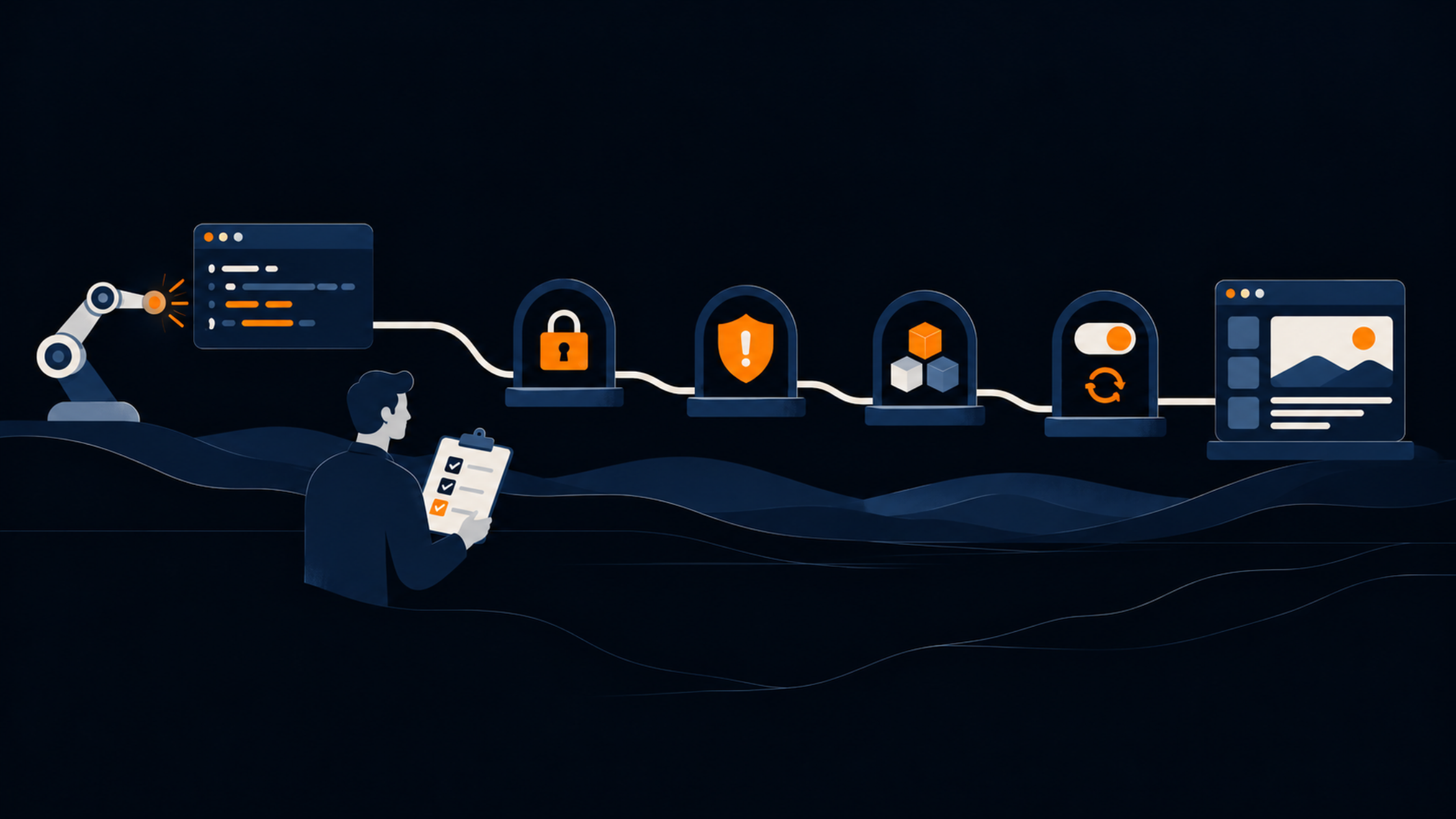
The model capabilities available today are already sufficient to build agents that handle complex, multi-step tasks. The bottleneck in most deployments is not the model. It is the surrounding architecture: memory, tools, orchestration, and evaluation.
Memory is moving from an optional enhancement to a required component of production-grade agent systems. The frameworks are maturing. There are now well-established patterns for external retrieval, session persistence, and multi-agent coordination. What has not kept pace in many organisations is the design thinking that needs to precede the implementation.
Getting this right early saves significant rework later. An agent pipeline built without a memory strategy can be extended, but retrofitting memory into a system that was not designed for it is painful. The data structures, retrieval logic, and state management that memory requires touch almost every part of the agent architecture.
If you are planning an agent deployment and memory has not come up in the design conversation yet, it is worth raising it before you begin building.
At Itsavirus, memory architecture is a standard part of how we approach agent projects. If you are thinking through how to structure a deployment, or you have an existing agent system that is not performing as expected, we are happy to talk through it. Reach out at itsavirus.com/contact-us