Most executives we talk to are not asking whether AI matters for their business. They already believe it does. The question they actually struggle with is more practical: where do you put the first euro, the first sprint, the first decision.
That gap between conviction and action is where a lot of AI initiatives quietly stall. Not because leadership lacks ambition, and not because the technology is too immature. It stalls because nobody has translated "we should be doing something with AI" into a concrete first move.
Board pressure, competitor noise, and a constant stream of AI news create a sense that standing still is dangerous. That instinct is correct. But urgency without direction tends to produce one of two outcomes.
The first is a scattered pilot. A team picks up a tool, builds something interesting in a few weeks, and then nobody can explain how it connects to a business outcome. The second is paralysis dressed up as caution. Leadership commissions a strategy deck, the deck identifies forty possible use cases, and the organisation never moves past slide forty.
Both outcomes come from the same root cause: trying to decide on AI as a category, rather than as a set of specific decisions tied to specific problems.
The companies that make real progress tend to skip the question "how do we adopt AI" entirely. Instead, they ask a narrower one: which part of our operation is expensive, slow, or error-prone in a way that's well understood and well documented.
That distinction matters because AI performs best on problems with clear inputs, clear outputs, and enough historical examples to learn from. Customer support tickets. Document review. Code migration. Reporting that currently eats a full day of someone's week. These are not glamorous use cases, but they are the ones that produce measurable results within a quarter, not a year.
We've seen this play out directly. When we worked with Ecologies, the starting point wasn't "implement AI." It was a specific operational bottleneck: reports that took too long to produce and carried compliance risk if they were wrong. Once that was the frame, the technical decisions became much easier to make.
Here's where a lot of executives get stuck unnecessarily. They assume that to lead an AI initiative, they need to understand the technical layer well enough to evaluate it themselves. They don't.
What they do need is the discipline to define the problem precisely enough that a technical team can act on it. That means being able to answer a short list of questions before any building starts:
If a leadership team can answer those four questions clearly, they have enough to brief a technical partner properly. If they can't, that's the actual starting point, not a memo from IT about which model to use.
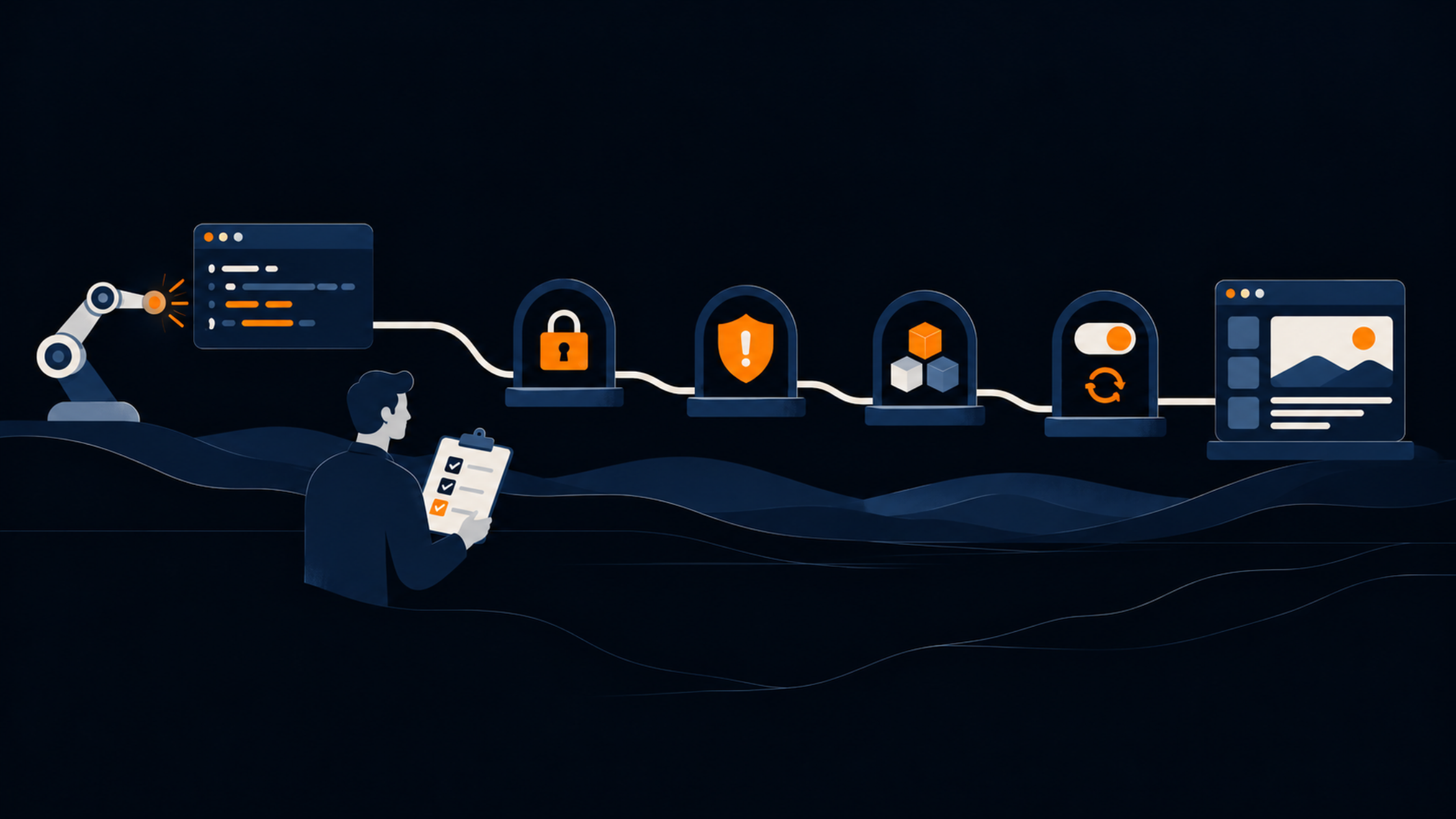
Once the problem is defined, sequencing matters more than ambition. A pattern that tends to work:
First, pick one process, not five. Five parallel pilots split attention and budget without producing a single strong result to point to.
Second, set a short timeframe with a real checkpoint, typically eight to twelve weeks. Long enough to build something functional, short enough that the organisation doesn't lose interest before seeing a result.
Third, involve the people who do the work today. The biggest risk to AI adoption isn't technical failure. It's a tool that looks impressive in a demo and gets quietly ignored three months later because nobody who actually does the job was consulted while it was being built.
Fourth, decide in advance what you'll measure and review it honestly, even if the answer is that the pilot didn't work. A clear no is more useful than a vague maybe that drags on for another two quarters.
None of this requires the executive to write a line of code or sit through a machine learning course. It requires the same skill that's always separated strong leadership from weak leadership: the ability to define a problem clearly enough that smart people can solve it, and the discipline to hold the result to a standard.
The technology side, choosing the right model, integrating it into existing systems, handling edge cases, is where a strategic technical partner earns their place. But that partnership only works once leadership has done its part: narrowing the field from "everything" to "this one thing, measured this way."
That's usually the real first step. Not a roadmap with forty initiatives. One well-framed problem, a short timeframe, and a willingness to look honestly at the result.
If your organisation is at the stage of knowing Al matters but not yet clear on the first move, that conversation is exactly what we exist for.
Itsavirus works with businesses on Al implementation, from the first decision through to production.
.jpeg)