Every commercial building is constantly generating data. Temperature sensors, HVAC systems, smart meters and connected devices produce thousands of data points every day. The challenge is rarely collecting that information. Most organisations already have more data than they know what to do with. The harder part is turning it into better operational decisions.
Our client Coolnomix set out to change that. The company builds AI-based energy optimisation technology for air conditioning and refrigeration systems, with reported average energy savings of around 30% for air conditioning and 20% for refrigeration, and payback typically within twelve months. Their hardware is used by organisations including Nokia, the NHS, HSBC, and DBS. What they needed was a software platform to match: an IoT middleware layer that could monitor and optimise energy usage across every connected device, at scale.
That is where we came in. We developed the platform, from architecture to deployment.
Before the platform, energy audits and device onboarding were largely manual. Technical teams collected data by hand, validated readings themselves, and configured each site individually. That approach works for a handful of installations. It breaks down when you are rolling out across hotel chains, office portfolios, and multi-site operations in different countries.
The devices were already measuring temperature, power draw, and room conditions in real time. The gap sat between the data and the decision. Someone still had to gather it, check it, interpret it, and act on it. Every one of those steps cost time and introduced room for error.
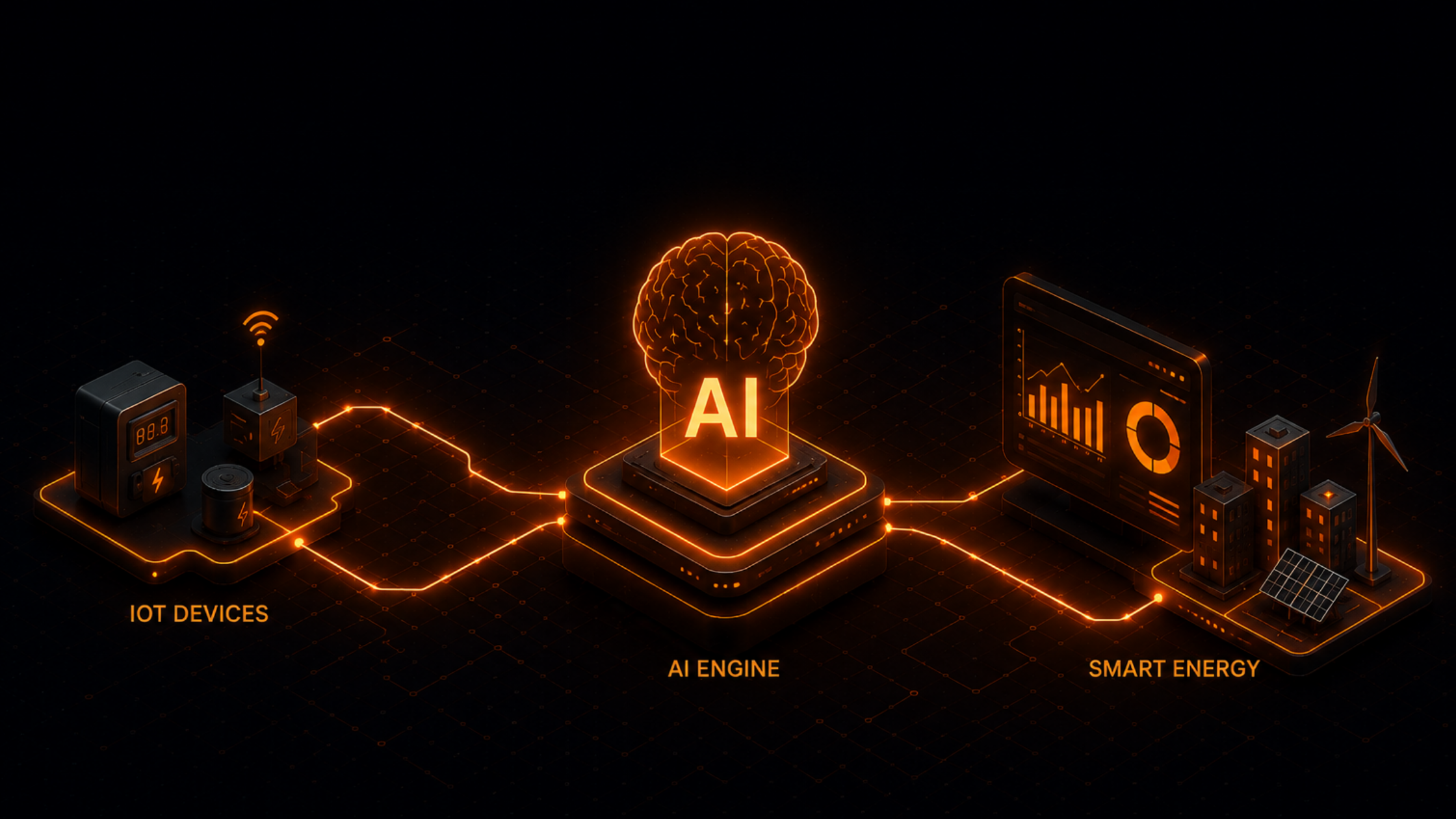
We designed and developed a platform that connects to a wide range of IoT devices and turns their live data into automated, validated insight. The main components:
The architecture was designed for scale from day one. A single office and a global multi-site operation run on the same setup, without additional configuration.
The clearest change was speed. Onboarding a new site used to take weeks of manual data collection and configuration. It now happens in hours, because IoT data streams and intelligent automation do the work that technical teams previously did by hand.
Accuracy improved alongside it. Because the models validate data continuously, the insights that reach a facility manager are ones they can act on without second-guessing the numbers. Technical teams spend their time on decisions rather than data entry.
The platform now works as a self-optimising energy management system. Real-time device data feeds AI models that adjust settings automatically, dashboards show the effect immediately, and reports document it without anyone compiling them. For Coolnomix, that means their hardware and software now scale together.
A few things stood out during this build, and they apply well beyond energy management.
The value of AI in an IoT platform is mostly in removing manual steps, not in adding features. The models that validate data quietly in the background did more for the platform's usefulness than any dashboard widget. If your team currently spends hours checking whether readings are correct, that is where automation pays off first.
Scalability is an architecture decision, not a later optimisation. Because we designed for multi-site rollout from the start, growing from one building to many required no rework. Retrofitting that capability into an existing system is far more expensive than building it in.
And onboarding speed shapes adoption. A platform that takes weeks to set up per site gets deployed slowly and reluctantly. One that takes hours gets rolled out everywhere. Reducing setup friction turned out to be as commercially important as the energy savings themselves.
As AI and IoT technologies mature, expectations are shifting from monitoring to operations. Businesses will increasingly look for platforms that learn from operational data over time, spot opportunities on their own, and act faster than any manual process could. For organisations managing complex facilities, that is where the competitive advantage will come from.
At Itsavirus, we help businesses design and build AI-driven platforms that combine intelligent software, scalable architecture and connected devices. Whether it's energy management, industrial automation or data-intensive workflows, our focus remains the same: turning data into decisions that create measurable business value.
If this pattern sounds familiar in your own product or operations, we would be happy to explore it with you. Feel free to reach out, no obligations https://itsavirus.com/contact-us
.jpeg)


The AI works on two levels. It continuously validates sensor and power data so facility managers can trust the numbers without checking them manually, and it adjusts settings automatically to reduce energy waste while maintaining comfort. The result is a system that acts on data rather than just displaying it.
Manual audits work for a handful of installations. Across hotel chains, office portfolios, or multi-site operations, every site adds hours of data collection, validation, and configuration. Each manual step also introduces room for error, so both cost and risk grow with every location added.
Yes. The underlying pattern, using AI to validate device data and remove manual steps between data and decision, applies to industrial automation, logistics, and any operation that collects sensor data but still processes it by hand.