There's a moment every service company knows well. A customer wants to buy or install a product, but they're not sure which model they have. They dig around for a manual they lost long ago, squint at the back of a unit, or send a blurry photo through a messaging app hoping someone on the team can figure it out.
For Coolnomix, a company that makes AI-powered energy optimisation devices for air conditioning and refrigeration systems, this was a friction point.
Their product range is technically specific: the right device depends on the type of AC unit a customer has, and that information lives on the nameplate, a small label typically stuck on the indoor unit.
Customers rarely know what to look for. Sales and support teams end up spending time on back-and-forth just to get the basics right.
On the surface, the solution is simple.
A customer photographs the nameplate on their AC unit, uploads the image through the Coolnomix website, and the system automatically identifies the unit and fills in the relevant form fields. No manual lookup, no guesswork and no need to call support.
But, if the image quality is too low or the nameplate data is ambiguous, the system doesn't just fail silently.
It takes what it can read and uses that as a starting point for a web search, pulling additional information from publicly available sources to fill in the gaps.
Once it has enough data, the form auto-fills.
The customer sees a completed form ready to submit, not a blank page asking them to type in information they probably don't have.
This kind of integration sits at an interesting intersection: it's not a major platform rebuild, and it's not a simple API call either.
It required thinking carefully about what happens when things go wrong and in image recognition, things go wrong fairly often.
Nameplates fade. They get dirty. Customers photograph them at odd angles with phones that aren't designed for close macro shots.
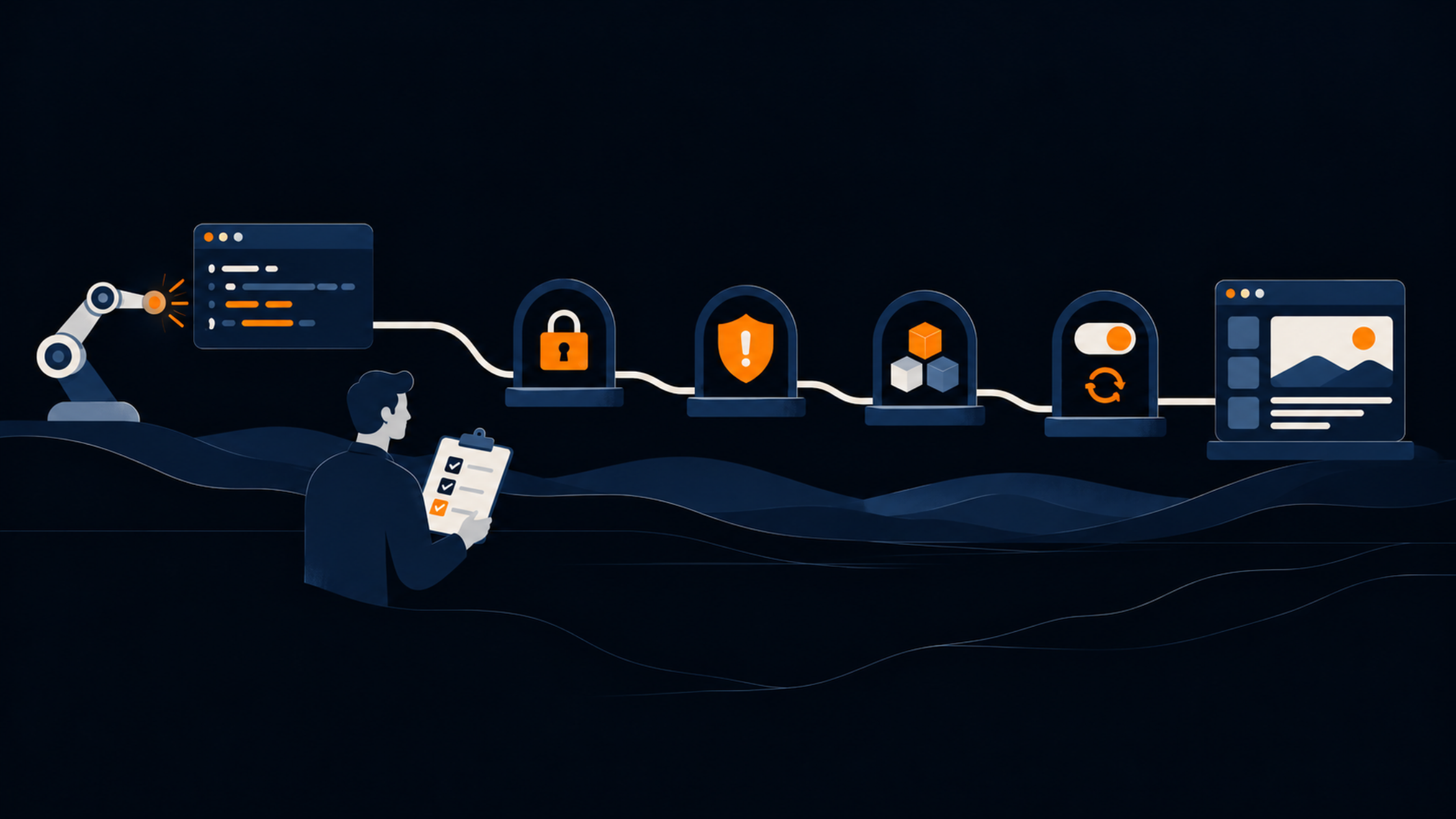
Building a system that handles only the ideal case wouldn't have been useful. Building one that degrades gracefully and actively compensates when the input is imperfect is a different problem.
The web search fallback was a deliberate design decision. Rather than returning an error when OCR confidence is low, the system uses partial information as a search query and attempts to complete the picture from external sources. It's a small architectural choice with a meaningful impact on the end-user experience.
What Coolnomix needed isn't unique to their business. Across industries, there are moments where a customer or field technician has physical information in front of them, a label, a document, a form that needs to become structured digital data quickly and accurately.
Manual entry introduces errors.
Structured forms require customers to know things they often don't. AI-assisted capture bridges that gap: it meets people where they are, with the information they actually have, and does the translation work automatically.
For Coolnomix, the practical outcome is a smoother purchase and installation journey. Customers can self-serve further into the process without needing to contact support. The sales flow is cleaner. And the data that enters the system is more accurate than what you'd get from manual input alone.
Integrating AI capabilities into an existing website isn't always as complex as it sounds but it does require clarity on where the process can break and what the system should do when it does. The difference between a good implementation and a frustrating one is usually not the AI model itself.
It's the error handling, the fallback logic, and the care taken around edge cases.
That's where most of the real engineering work happens. If you're working on something similar, connecting physical information to digital workflows, or adding AI-assisted steps to an existing customer journey, we're happy to talk through what's involved.
Get in touch and we can explore what makes sense for your situation.